
Dr. Mae-Wan Ho finds strong allies for her idea on sustainable systems as closed cycles modelled on the organism (Dream Farm 2 - Story So Far) during her recent visit to China , especially in a land-water farming system developed over the past two thousand years
The clouds and mists cleared as we prepared to land in Guangzhou, and a remarkable landscape came into view. Like a mosaic of silver mirrors embedded in emerald, hundreds, if not thousands of ponds filled the spaces between the Pearl River tributaries as they meandered and fanned out into the South China Sea.
The ponds were predominantly narrow rectangles stacked broadside on, with shorter rectangles, squares, and irregular shapes pressed into service to fit the topography. The main effect was to leave cultivated strips of land and the occasional fields between adjacent bodies of water.
The Pearl River Delta of South China, sprawling over 12 000 km2, is famous for its dyke-pond system of fish farming combined with the cultivation of crops [1]. It contains one of China’s richest and most densely populated agricultural areas, supporting an average of 17 persons per hectare.
The dyke-pond system evolved over the past two thousand years, perfected by generations of Chinese farmers into a ‘circular’ economy of intensive agriculture integrated with the polyculture of carps and other freshwater fishes, on a geographic and economic scale unrivalled elsewhere in the world. It depends on maximising internal inputs between land and water, optimising the efficient use of resources while minimising wastes.
The director of the Guangzhou Institute of Geography, Prof. Zhang Hongou, stressed that ‘circular economy’ is a guiding principle in mainstream Chinese thinking, as opposed to the linear economy of the West. Perhaps that is at least partly why the Chinese economy has been growing mostly in double figures over the past decade.
Guangzhou Institute of Geography was established in 1958 as part of the Chinese Academy of Sciences, and in 1999, received recognition from the Chinese government as one of Ten National Distinguished Organisations. Among its accolades is the scientific study of the dyke-pond system pioneered by Prof. Zhong Gongfu and his colleagues in the 1970s, and its successful extension for flood control and improved land use (see later).
The Institute also researches on regional development in Guangdong, tropical and Chinese geography, environment and ecology, remote sensing and land use. It runs a web resource for remote sensing and environmental protection, and publishes a journal.
In the late 1980s when Guangzhou Institute first carried out the survey, the main dyke-pond area covered 86 632 ha between the two major Pearl River tributaries, Xijiang and Beijiang, of which 30 321 ha (35 percent) were fishponds, combined with the cultivation of mulberry (10 395 ha, 12 percent) or sugar cane (15 593 ha, 18 percent). The remainder 30 322 ha (35 percent) was mainly irrigated rice (25 percent) and a variety of mixed or miscellaneous agriculture that includes dykes specialising in fruit trees, vegetables or decorative plants and flowers [1].
The pond is the heart of the system. To produce a pond, soil is excavated and used to build or repair the dykes surrounding it. Before it is filled with water, the pond is prepared by clearing, cleaning and fertilization with quick lime, tea-seed cake and organic manure from livestock kept on the dykes. Most ponds are rectangular, 0.4 to 0.6 ha in area and 2 to 3 m deep. The dykes are usually 6 to 10 m wide, and extend 0.5 to 1.0 m above the pond surface. Various fish species live at different pond depths, and have different feeding habits, thereby making full use of the water and the pond ecology. The typical polyculture is a combination is the “four big family fish”: grass carp (Ctenopharygodon idellus), silver carp (Hypopthalmicths molitrix), big head carp (Aristichthys nobilis) and common carp (Cyprinus carpio), requiring little or no external input.
The pond mud, much enriched in nutrients, serves as fertiliser for crops. Ponds are drained two or three times a year, and the mud at the bottom is dredged up to put on the dykes, thereby raising and repairing the dykes and restoring the depth of the pond. Pond mud is also used for mushroom cultivation. Mushrooms are often cultivated on the floor of the silkworm shed in winter, the off-season for silkworm production. After the final crop of mushrooms has been harvested, the mud-bed is used to fertilize vegetables, fruit trees and grasses.
The pond is filled with river water. Water also enters directly as rain and through runoffs from the dykes. Water leaves the pond via the pond drainage outlet in controlled discharges. It is also lost through evaporation and transpiration, via seepage into the dykes, and through being removed at regular intervals to ‘fertigate’ the crops growing on the dykes.
Livestock is an important link in the circular economy. Pigs, chickens and ducks are reared on the dykes, to provide manure to fertilise the fishponds, to encourage the growth of plankton that feed the fish.
Most dyke crops are fed directly to the fish, such as elephant grass for the grass carp, or else to the livestock, such as forage crops for pigs.
With a tropical to subtropical climate, the dyke-pond area is well endowed with sunshine and rainfall, and hence extremely productive, especially with a system that recycles and transforms all the “wastes” into nutrient resources.
The circular economy can be quite complex [1-3]. I have drawn a diagram of a simple system involving mulberry cultivation. Mulberry leaves are picked to rear silkworms, from which silk cocoons are harvested, while the wastes of silkworms are used to fertilise the pond to feed the fish. With only pigs and vegetables included, there are at least 11 cycles in the diagram varying in length from two to five links.
The external energy input is minimal, and consists of mainly labour and the energy expanded to make farming implements, housing and equipment for rearing silkworms, and machinery and energy to aerate the fishpond and to dredge it. The major energy input by far, of more than 99 percent [2], is sunlight, and it is free.
There are numerous harvests, fishes, silk cocoons and vegetables being the major ones for the system depicted, pigs would be a minor harvest. Some harvests would include livestock such as chickens and ducks as well as mushrooms.
Fish sales contribute the largest source of income to the region’s agricultural sector, some 50 percent of the total fish production of Guandong Province and 80 percent of the nation’s export in live fish.
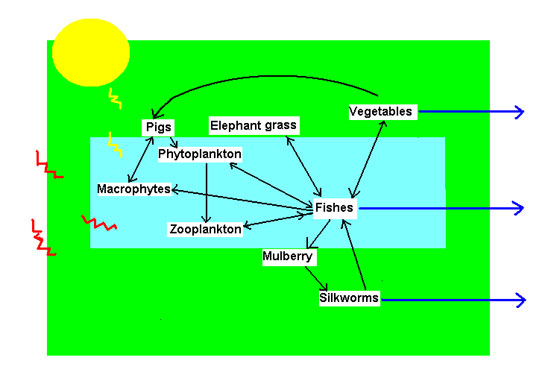
Figure 1. Circular economy of dyke-pond system
Since the late 1970s, the traditional dyke-pond system of the Pearl River Delta has been undergoing dramatic changes. The first was a major shift from a collectivist to household production as part of the major rural reforms implemented throughout China. The second involves an intensification of production, a gradual supplementation of internal inputs with external inputs and a move away from the previously sustainable circular economy.
About 1 000 years ago, the coastline of the Pearl River Delta was very different. The delta of Zhujiang, the most northern of the three major tributaries, met the delta of Xijiang, the most southern tributary [4], and the lowlands were neither widely nor continuously cultivated on account of flooding and the presence of sulphuric acid soils. The villagers depended heavily on capturing and collecting marine, riverine and wetland resources. At higher elevations, however, fruits were cultivated, especially litchi (Litchi chinensis) and longan (Euphoria longana).
During the mid-fourteenth century, water control measures were started in the lower-lying areas. Small watercourses were dammed and dykes created to make fishponds. Ponds were dug to drain the marshes and natural ponds in order to create agricultural land, and the excavated soil was used to construct the dykes. The fishponds were stocked with carp fry naturally occurring in Xijiang.
The first commercial crops to be grown on the dykes were litchi and longan, but there were no conscious effort to integrate pond and dyke ecology until much later. By the 1620s, mulberry was widely cultivated on the dykes and the economic returns from the integrated mulberry dyke-fish pond systems were found to be greater than fruit-tree cultivation.
Thus, the circular economy of the dyke-pond system evolved out of a flood control measure, and it has been used effectively for the same purpose since. It will have worldwide applications as sea level rises in coastal areas, and in flood-prone areas fed by melting ice and glaciers.
Outside the core region of the traditional dyke-pond system, there remains in Guangdong Province some 200 000 ha of flood-prone lowland, including the areas along the lower reaches of the main rivers and the coastal lowlands of the Zhujiang Delta. Most of these lowlands are seasonally flooded to depths of 1 to 1.5 m, and sometimes as much as 3 m of river and rainwater, exacerbated by a history of deforestation in the watersheds of Guangdong Province.
Since the 1950s, various measures have been taken to manage the flood-prone lands: building reservoirs and canals, contour ditching, sluice systems to raise the water in canals and to drain floodwaters; establishing a network of pumping stations to drain water from the flood plains into the canals; and reforestation in the highlands. In the coastal regions, earthern dykes were reinforced or replaced by concrete to improve resistance to typhoon-driven high hides, irrigation and drainage systems were separated by tunnels to lower the water-table, an electric pumping network was installed for drainage and irrigation and low-lying land was elevated by spreading soil.
These measures succeeded in reclaiming much of the flood-prone lowland, making agriculture possible and improving public health. Schistosomiasis (a disease spread by a parasitic worm) was eradicated. However, some 30 percent of the lowland by the rivers in Guangdong still remained to be brought into sustained productive use. This consists of widely scattered land in small pockets, or especially low-lying and not amenable to reclamation by other measures. Similarly, in the coastal zone, despite the use of pumping stations for drainage and irrigation, crops yields remained low owing to high water tables and salination. The dyke-pond system has proven effective in transforming those waterlogged lowlands into productive sites. Fishponds were dug and the excavated sediment used to construct raised dykes and fields.
Scientists in the Guangzhou Institute of Geography started a research project in the early 1970s supported by the United Nations University [1-3, 5]. They established an experimental station in Shunde County in the heart of the dyke-pond region to study energy flow and material cycles in the newly established dyke-pond systems, and were able to document the successes [5].
Deqing County, 240 km west of Guangzhou is one of the most seriously eroded regions in the Province. Many watercourses got silted up and the streambeds became higher than the surrounding fields, with the result that about 10 percent of the fields were waterlogged. Two tracts of lowlands were selected for introducing the dyke-pond systems in 1979.
The first, a 19 ha tract called Liangqintang normally yielded a single rice crop yearly, and was used for fish culture during the high-water season. Productivity was low, no more than 3.75 tonnes of rice/ha and 0.75 tonnes of fish/ha. Often, production failed altogether; and people referred to it as “a tract of three harvests in ten years”.
The tract was converted to a dyke-pond system growing bananas and elephant grass (for fish feed). A small distillery and pigsties were constructed next to the pond. The distiller’s grain was fed to the pigs and the pig wastes emptied into the pond. The 1981 fish harvest reached 3.0 tonnes/ha. In 1982, the total harvests (over all 19 ha) jumped dramatically to 125 tonnes of fish, 150 tonnes of bananas, and 75 tonnes of pork, not counting large amounts of vegetables. The net income for 1981 was already 7.6 times higher than in 1978 before the project began.
The second site selected in Deqing County was a tract of 2.7 ha of seasonally flooded lowland along the Xijiang River in Quianhoujie Village. It was converted into a mulberry dyke-pond with some vegetables. A pigsty was constructed near the pond. Mulberry leaves were fed to silkworms, the silkworm excrement and pig manure were emptied into the pond. The pond mud was used periodically to fertilize the dyke soil. By 1982, the net income increased 200 percent from 1981; and that in 1983 was 60 percent higher than 1982.
Doumen County, located in the southwestern part of the Zhujian Delta, has 40 percent of its land at 0.2 to 0.8 m below sea level. Electric pumps are commonly used to remove water from low-producing rice and sugarcane fields. A variety of dyke-ponds were successfully installed in the late 1970s, which then spread to the whole country.
The low-lying fields at Anfenwei in east Doumen are inundated annually for several months. Since 1979, 6 ha of fish ponds were dug to a depth of 2.5 to 3 m and the mud removed was spread over the fields at an average rate of 750 m3/ha/year. After several years, the fields were raised to sea level and no longer water-logged. The fields were planted in a rice-sugarcane rotation and interplanted with vegetables. Pigs and poultry were raised close to the ponds and their excrement emptied into the ponds. Rice yields increased from 6 tonnes/ha/year to 7.5 tonnes/ha/year, and 4 tonnes of fish were harvested in addition to pigs and poultry. Electricity bills were reduced 20 to 30 percent annually because of decreased need for drainage pumping. Up to 1982, at least 700 ha of fish ponds have been dug in the entire county, and about 10 000 ha of low-lying fields have been elevated.
The Chenhai-Raoping district of 48.6 km2 situated between Changhai and Raoping Counties in east Guangdong Province resulted from a reclamation and farming project completed in 1971. However, much of the area is still under water.
A research team from the Guangzhou Institute of Geography designed an integrated development programme including the dyke-pond system [6], and put the programme into operation in 1983. By 1987, remarkable improvements were achieved in all aspects, including the dyke-pond system. A total of 262 ha of ponds had been constructed yielding 5.805 tonnes fish/ha at a value of 6.08 million Yuan/year. Considerable amounts of vegetables and forage crops were also harvested from the dykes.
These remarkable successes were not followed up, however. Practically all the academics involved in the dyke-pond projects had soon retired or were near retirement, and market forces and other pressures of rapid industrialisation came into play.
“China has developed too quickly, at 10 to 20 percent growth in GDP a year,” the Institute director Prof. Zhang said, “This has placed agriculture under great pressure. Industrialisation has led to a decrease in land available for agriculture, and the pressure to produce more from less land has resulted in increased pollution.”
The professors of the dyke-pond system, Zhong Gonfu, Wu Houshui, Deng Hanzeng and Liang Kuo Ziao, now all retired, came to meet with us to explain their work, thanks to the tireless efforts of Prof. Zhong Ying, daughter of Zhong Gongfu, who acted as our guide and mentor throughout the most enjoyable and productive five days we had in Guangzhou. She and Prof. Wu Houshui accompanied us for a day tour to important sites, including the dyke-pond region, or what is left of it today.
The experimental station where they carried out precise measurements on energy and material flows has long since gone, and many of the sites they surveyed or worked on have disappeared. Prof. Wu Houshui estimates that perhaps half of the pond-dyke area may have gone under the pressure of industrial development. All agreed that there was a need for projects like Dream Farm 2 [7] (Dream Farm 2 - Story So Far) to integrate biogas production and other renewable energies with sustainable agricultural production. Prof. Zhang Hongou was very receptive to the idea, and we agreed to develop future collaborations.
The success of the dyke-pond system owes a lot to the particular combination of ingenuity and industry of Chinese farmers, and it is still much in evidence today.
The farmers are extremely skilled at maximising the use of space, time and resources; but a commitment to hard work is also necessary. Gourds and melons are trained on trellises overhanging ponds and drainage ditches, and crops are planted together so that sun-loving species provide shade for those requiring it. Plantings are timed so that several harvests are obtained from the same piece of land.
Where sugarcane is planted, the main product is sugar, but the young leaves are fed to fish and pigs, and old leaves used to shade vegetable gardens. Refinery wastes are returned to the dyke pond as fish and animal feed. Bamboos are often planted to provide poles for construction and materials for making baskets, traps, screens, trellises and frames. Bamboo wastes are also used as fuel.
During our all too brief tour of the dyke-pond region, we met a farmer by the roadside, knee deep in the drainage ditch, dredging up the black mud from the bottom of the ditch to put onto her vegetable garden that reached right up to the water margin of the ditch. Her garden is a perfect example of the intensive and ingenious use of limited land. The Chinese government gave her one fen of land (one-tenth of a Chinese mu = 0.0667 ha), but she grows enough to feed her own family, with plenty left over to sell on the market. She offered to invite us to lunch on the spot, on hearing that we were from London in the UK; unfortunately we were unable to accept her due to the lack of time.
Other ingenious use of the pond was to raise ducks, the faeces of which go directly to fertilise the fish and we saw plenty of that.
Fish farming can be very profitable, but is also increasingly at the mercy of market prices. Chinese love good food to extreme, and restaurant meals are a must for any visitors (fortunately for us). The foyer of restaurants in Guangzhou is typically filled with aquariums exhibiting live fish that you can choose for your meal with the price per catty clearly marked, and it is considered impolite to choose cheap fish for the guests. Any fish that became too available would become cheap, no matter how tasty it is, and hence could bankrupt the fish farmer overnight.
We saw signs of intensification of fish farming that was clearly unsustainable. A worker was hired to feed cut-up frozen sea fish to some highly priced carnivorous fish reared in a pond owned by someone else, and the feeding shed was filled with “fish medicines” to control diseases and parasites probably brought in by the feed, and by the pond being too heavily stocked. The price of the feed was 1.50 Yuan per catty, while the fish in the pond was fetching $15 per catty in the market.
High stocking rates of fishponds, external feeds, diseases, and “fish medicines” all contribute to fouling the pond water, which becomes a serious source of pollution when drained into the rivers and lakes. Intensive fish farming has indeed become an ecological problem in search of a solution, and Dream Farm 2 [7] could well offer a way forward.
Article first published 09/10/06
Comments are now closed for this article