
For the first time, electromagnetic signals specific to HIV can easily be detected in patients undergoing antiretroviral therapy that has no virus detectable in the bloodstream; prospects for a science of homeopathy looking good. Dr. Mae-Wan Ho
Luc Montagnier, recipient of the 2008 Nobel Prize for the discovery of the human immunodeficiency virus (HIV), may have scored another success, if highly controversial in the mainstream community. His research team found electromagnetic (EM) signals consistently produced in dilute solutions of the HIV virus DNA in water.
HIV is a RNA virus, normally detected in the blood stream of people infected with the virus. The viral RNA is not responsible for the EM signal. Instead, it the complementary DNA (cDNA) sequence that does the trick. DNA signals are detected only in patients previously treated by antiretroviral therapy and having no detectable viral DNA copies in their blood [1].
The findings suggest that treatment of AIDS patients with antiretroviral drugs pushes the virus toward a new mode of replicating that involves DNA and insensitive to the drugs. This has implications for new approaches to eradicating AIDS disease, and also for the science of homeopathy.
Antiretroviral therapy (ART) has become the standard treatment of HIV infection. It is generally a combination of three or four inhibitors of the viral reverse transcriptase and protease, and results in an apparently complete disappearance of the HIV viremia - measured by RNA copies in the patient’s blood - within 3 to 6 months. However, as soon as the treatment is interrupted, virus multiplication resumes within weeks, viral RNA copies increases in the blood, and the CD4 T cell numbers drop.
This indicates the presence of a viral reservoir that is not accessible to the antiretroviral drugs, possibly proviral DNA integrated in cells in a dormant state. In the study, the researchers showed that ART induces the release of HIV DNA sequences into the patients’ blood, which is detectable by “a new biophysical technology” previously described for bacterial DNA [2] (see ‘Homeopathic’ Signals from DNA, SiS 48). Effectively, ART pushes the virus towards a low level of replication using only DNA templates. That is why “classical inhibitors used in ART cannot achieve eradication of the viral infection”, said the researchers.
A device used originally by Jacques Benveniste (immunologist turned homeopathy researcher) enabled them to detect low frequency EM waves, apparently emitted by high dilutions in water of DNA from pathogenic bacteria.
CEM cells (a cell line derived from human T cells) were infected with HIV1. The supernatants were serially diluted 1 in 10 and checked for EM signals, and gave negative results as in the experiments with bacteria.
It was necessary to pass the supernatant through a filter with pore size of 20 nm to separate the putative “emitting nanoparticles” from the intact virus particles, which were 100 to 120 nm. When centrifuged through a sucrose gradient, the virus particles formed a sharp band at a density of 1.16. In contrast, the nanoparticles producing the EM signals were associated with fractions ranging in densities from 1.15 to 1.25.
Plasma samples were obtained from three groups of patients (altogether 125): asymtomatic untreated; symptomatic not yet treated and with high virus load; and symptomatic treated with antiretroviral therapies and no detectable virus load.
EM signals were only detected regularly in the third category in all 30 patients. The EM signals were detected in plasma dilutions ranging from 10-4 to 10-8. No EM signals were detected in patients belonging to the other two categories except for one untreated patient with AIDS disease.
To detect EM signals, the plasma had to be kept unfrozen and stored preferentially at 4 ˚C. Freezing and storing at -29 or -80 ˚C destroyed the capacity to produce EM signals. Serum from clotted blood was also negative for EM signals, whether kept at 4 ˚C or frozen. Heating the diluted plasma at 65 ˚C for one hour inactivated or reduced significantly their ability to produce the EM signals. Filtration through 20 nm filters was necessary for detecting the signals, as in the in vitro studies.
To pin down the source of the EM signals, nucleic acids were extracted from the plasmas of the three different groups of patients. Ethanol precipitates (containing the nucleic acids) were dissolved in water and the solutions were filtered through 20 nm filters. DNA concentrations were adjusted to 1 to 4 ng/ml of a buffer solution, and diluted and tested as before.
EM signals were detected only in the group of patients treated by antiretroviral therapy and having undetectable virus load. The signals were produced in the same range of aqueous dilutions as in fresh plasma, filtration of the original solution, and vortex agitation after each aqueous dilution are necessary for EM signals to be detected.
Treatment of the original solution by RNAse (to break down RNA) had no effect, suggesting that DNA rather than viral RNA is producing the EMS. This was confirmed by treating the original solution with DNAse, which destroyed the capacity for producing the EM signals, provided that the nanostructures previously induced by the DNA were abolished by freezing. DNA molecules are not affected by freezing, and can re-induce the water nanostructures after freezing. The dilutions positive for EM signals ranged from 10-3 to 10-9 of the original solution
The heparinised blood of several HIV-positive patients undergoing ART was run on a Ficoll (density) gradient and DNA extracted from the three main fractions: plasma, white blood cells and the red blood cell pellet. The EM signal was stable for several days, sometimes for several weeks when stored at 4 ˚C
In all the patients with undetectable virus load, only DNA from the plasma and the erythrocyte fractions gave strongly positive signals. The white cell layer-derived DNA gave no signals or only weak signals. In ART patients with remaining high virus load, only the plasma-derived DNA was positive.
To identify the DNA sequence responsible for the EM signals, the researchers designed specific primers to amplify different part of the HIV genome and tested the resulting DNA purified by agarose gel electrophoresis. As a control, the entire proviral HIV DNA genome was also tested and found positive for EMS. Several sequences in the proviral genome were the source of EM signals: LTR, NEF and ENV.
The same primers were used to detect specific sequence in the DNA extracted from the plasma or the red blood cell pellet of the positive patients. The LTR DNA fragment was consistently found in all preparations, followed infrequently by NEF and ENV. Interestingly, a higher sensitivity of detection was obtained using reverse transcriptase before the Taq polymerase in the PCR reaction. But the reaction was not affected by prior RNAse treatment, indicating that the reverse transcriptase was using a DNA template and not RNA.
The most important result, apparently paradoxical, was that only HIV-related DNA sequences from patients treated with antiretroviral therapy and having no detectable RNA in their blood can be detected by EMS emission and by PCR. Naïve untreated patients show no evidence of such DNA.
This result was obtained with patients of different geographic locations: North America, Europe, West and Central Africa, presumably infected with different HIV subtypes. DNA is not only detected in the plasma but also found associated with red blood cells that have no nuclear DNA. So the DNA associated with them was probably present in nanostructures bound to the red cell membrane or in nucleated cells that sedimented with the red blood cells, perhaps granulocytes. In treated patients having still a detectable virus load, the DNA was only found in the plasma fraction.
The results suggest that the active DNA come from DNA fragments in the blood from the breakdown (apoptosis) of some infected cells containing the proviral DNA in a latent state. Alternatively, the DNA represents forms of unintegrated HIV DNA. Various circular DNAs have been described during HIV infection in vitro and in vivo. And persisting episomal (unintegrated) HIV DNA have been described in some patients on ART with undetectable viral RNA in their blood. A third hypothesis favoured by the researchers is that the ART works efficiently to prevent reverse transcription of viral RNA into DNA and therefore blocks any productive infection of susceptible cells. However, it will not prevent DNA-DNA replication in a non-integrated state. In other words, ART will push the virus towards an alternative way of replication, probably minor and depending on a cellular DNA polymerase, but sufficient to maintain the viral genome as unintegrated viral DNA and able to resume the normal viral cycle if ART is interrupted. The cells and tissues in which this DNA replication occurs remain to be identified.
In addition, when aqueous dilutions were tested, a 10 to 100 fold increase of sensitivity was obtained when each dilution was strongly agitated by vortex. This suggested a to the researchers a “resonance phenomenon” of “water polymers”; though no further details were given on either.
Montagnier and his team have demonstrated that highly reproducible electromagnetic signals can be detected from biological samples, and that the signals are responsible for a biological function, i.e., bacterial and viral infection [1, 2]. They have tracked down the source of the signals to specific pathogenic sequences in the genomes of the bacteria and viruses concerned. Furthermore, these signals (and associated biological function) appear to survive in “nanostructures” even after the DNA solutions are highly diluted, possibly to the point where no molecule of the original DNA is present.
These findings are analogous to observations in highly diluted homeopathic remedies that claim to be efficacious even after all molecules of the original substance must have been diluted away. But there is one important difference. For the first time, the putative memory of the water invoked for homeopathic activity, in the form of specific electromagnetic signals, can be clearly and independently detected. This is the major breakthrough that Montagnier and his team achieved. It should now be possible, in principle, to distinguish homeopathic preparations that are active from those that are not. This alone would do much for advancing the science of homeopathy, and contribute towards our understanding of water (see [3] The Rainbow Ensemble and other articles in the series, SiS 48). Obviously, it is necessary to investigate if all homeopathic remedies have specific EM emissions that can be detected by appropriate instrumentation.
The research raised a number of key questions that need to be addressed, the most pressing being: What are the emitting nanostructures and why do they emit?
That DNA should emit electromagnetic signals is not surprising. There is evidence dating back to the 1980s that DNA has molecular vibrations in a wide range of frequencies, from below 1 cm-1 (radiofrequency) to 4 000 cm-1 (far infrared) [4-6], which can be detected, or stimulated and modified by externally applied electromagnetic fields.
Montagnier and colleagues invoke vague “resonance” induced by the ambient electromagnetic noise from the mains. One kind of resonance that could be induced under such circumstances is nuclear magnetic resonance. It appears that the earth’s magnetic field can substitute for the much stronger static magnetic field used in a nuclear magnetic resonance (NMR) experiment (see [4] Cooperative and Coherent Water, SiS 48). If that is the case, the ambient field, which appears to be necessary for producing the signals, plays the part of the radiofrequency field in a usual NMR experiment. The resonance frequency would then be shifted correspondingly to lower frequencies, perhaps from microwave to audio frequencies (~1 000 Hz) as reported by Montagnier and colleagues [1]. In this context, the mechanical stimulation (equivalent to ‘succussion’) may serve also serve as stimulation for these specific vibrations. It is perhaps important to emphasize that the vibrations may not be those of the DNA sequence, but rather, those of DNA sequence modified by the water and other constituents (see later).
However, it does not tell us how the water can have memory of such specific vibrations, especially when the DNA molecule has been diluted away. Montagnier and colleagues proposed that the immediate source of EM signals are “nanostructures” - retained by filters of pore sizes either 100 nm in the case of bacteria [2] or 20 nm in the case of HIV [1] and displaying a broad range of densities from 1.15 to 1.25 - presumably created by the specific DNA sequence originally present.
Martin Chaplin, prominent water researcher at South Bank University, London, in the UK, reviewed the memory of water in 2007, and pointed out that if by memory of water, it means that water retains a history of its past experience, then there is plenty of evidence [7]. For example, a well known memory-effect is associated with the formation of clathrate hydrates, cage-like structures of water around small molecules such as methane gas. A water sample that has been crystallized into a gas clathrate under pressure and then melted will more quickly re-form the clathrate hydrate when mixed with the gas and pressurized, compared with water that did not experience the hydrate state. However, the question is how such memory could be formed and retained, even when the original substances have been diluted away.
There are many hypotheses on how memory of chemical substances could be formed and retained in water. The one which suggest itself (to me) most strongly is what I shall call “the silica-water epitaxy hypothesis”. Epitaxy is a well known phenomenon in material science. It is the growth of one crystalline material on the surface of another to mimic the structure of the latter. In more general terms, it is the structural imprint of one substance on another. Roy Rustum, Distinguished Prof of Materials at Arizona State University and Professor of the Solid State and of Geochemistry at Pennsylvania State University (who has just passed away) has long drawn attention to the importance of epitaxy in homeopathy [8].
Silica (SiO2) is the most abundant substance on earth by far. It occurs in sand, and in glass, more specifically in the glassware for making homeopathic remedies; and many have suspected dissolved silica to play a key role in the potency of homeopathic preparations.
David Anick at Harvard Medical School and John Ives at Samueli Institute for Information Biology, Alexandria, Virginia, in the USA, have clearly articulated “the silica hypothesis of homeopathy” from a physical chemical perspective [9]. I shall restate the hypothesis more generally as the “silica-water epitaxy hypothesis” as follows: homeopathy remedies contain dissolves silicates that, in concert with water, retain the structural imprints (and associated electromagnetic signature) of the substances originally dissolved in water. I hasten to add that all the evidence for the hypothesis is contained in the paper by Anick and Ives, and I am only renaming it to make the mechanisms more explicit.
Silica dissolves in water by joining with two water molecules to form silicic acid Si(OH)4, which has a low solubility in water of around 0.01 percent, though additions of Na2O or other alkali can dramatically increase solubility.
Silicic acid can polymerise under pressure to form dimers, trimers, and higher oligomers up to about 12 in concentrated solutions. Anick and Ives proposed that succussion against the glass wall of the bottle initially generates a saturated or supersaturated solution of silicic acid, which could polymerize in later successions, due to the momentary high pressures generated, which favour polymer formation. Low concentration of dissolved silicon has been reported in many homeopathic preparations.
The dissolved silicic acid and acid polymers, as well as the water, interact with the substances in the homeopathic ‘mother tincture’ (MT, usually a 1 M solution) through molecular epitaxy, in which both silicic acid and water are imprinted by the MT, and no doubt, the imprinting is mutual. In this way, a complex dynamic quasi-crystalline structure can be maintained even when the original MT substance has been diluted away.
The remedy would be specific, on account of the specificity of the molecular imprint. As it turns out, liquid water has an infinitely variable and changing supramolecular structure (crystalline or quasi-crystalline structures) reflected most of all in the endless variety of snowflakes, each unique, that can be formed in nature (see [10] Cooperative and Coherent Water, SiS 48). Similarly, the intricately sculpted diverse silicaceous shells of diatoms offer us a hint of the immense array of possible structures that silicic acid could adopt in an imprinting setting (see Fig. 1).
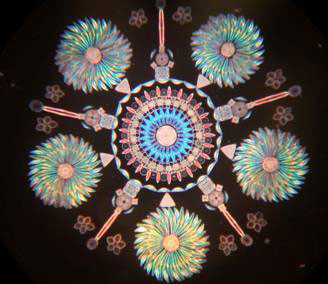
Figure 1 Composition with different diatoms, from diatoms.co.uk
One aspect that the silica-water epitaxy hypothesis does not address is how homeopathic remedies actually work. Montagnier and colleagues’ identification of specific EM emissions is significant. I am among those who have long advocated that electric and electromagnetic signals are involved in intercommunication within organisms and between organisms (see [11] The Rainbow and the Worm, The Physics of Organisms, I-SIS publication). There is also evidence suggesting that molecules including proteins and DNA interact by resonating to specific frequencies [12] (The Real Bioinformatics Revolution, SiS 33). That is why I have included the associated electromagnetic signature produced by the silica-water system in the statement of the hypothesis.
The obvious next step is for Montagnier and colleagues to characterize the “nanostructures” responsible for the EM signals, to see if they are indeed dissolved silica structured by the DNA and water in the original supernatant.
A science of homeopathy has the potential to revolutionize biology and medicine.
I thank John Bennett of Portland Oregon for very helpful information and summary on the science of homeopathy.
Article first published 02/09/10
Comments are now closed for this article
There are 9 comments on this article.
Dharmendra Comment left 9th October 2010 16:04:25
I find your style very informative.
patrons99 Comment left 5th September 2010 06:06:39
KUDOS, Dr Ho. Fascinating article.
Pharma needs to “get a grip” and “just accept it”. Mankind’s survival rests on homeopathy, not allopathy (xenobiotics). Begs the question as to whether electromagnetic fields, e.g. pulsed magnetic field gradients, might one day be a viable non-invasive therapy. Your concept of energy transfer at a distance with water as the concertmistress and lead player is simply brilliant. I once did a fair amount of multinuclear organic magnetic resonance spectroscopy as a bioorganic chemist. So naturally, your thinking “resonates” with me.
Dr. Nancy Malik Comment left 11th September 2010 04:04:50
Real is scientific homeopathy. It cures even when Conventional Allopathic Medicine fails. Nano doses of evidence-based modern homeopathy medicine brings big results for everyone
Rory Short Comment left 3rd September 2010 06:06:16
This is fantastic. Hopefully it will not only cause a revolution in biology and medical science but it will also revolutionize the paradigm through which those of us, steeped in the current Western scientific view of life and the world, see life and the world.
Cathy Benneth Comment left 3rd September 2010 06:06:22
Thank you for this wonderful article and thank you for mentioning my husband JOHN BENNETH (spelling) for his information and summary on the science of homeopathy. We reside in West Linn, Oregon. He is impressed with your work and refers to you often.
Dr Comment left 3rd September 2010 21:09:08
Very interesting article. Homeopathy, without doubt is very scientific and effective system of treatment. John Benneth from Oregon, USA is well known authority confirming the efficacy of Homeopathy. Thanks and regards to Dr Mae-Wan Ho and Mr Benneth.
Dr. Nancy Malik Comment left 21st May 2011 15:03:34
Evidence of homeopathy is undeniably positive and consistent. It's a human evidence of experience, gathered from a real-world observation in a real-world setting (not in an ideal artificial laboratory) giving real-world solutions.
HMS Comment left 24th November 2011 23:11:34
Thanks for the post or share information.
It was really helpful to solve my confusion.
Occupational Medicine
makini farr Comment left 23rd April 2012 06:06:41
I thought the articles I read were very informative. What I did not see was a way you can take part in the actual treatment program. I know of a few people suffering from HIV, and the treatment with ozone and a multimodal program, seemed to be an excellent way to attempt to cure the disease. If they were interested, how could they take part in the treatment and what is the cost.