
Invited lecture at European Quantum Energy Medicine Conference, Copenhagen, 19th September, 2008
Thank you for organising this conference and inviting me among a panel of such distinguished fellow lecturers whom I also know to be true scientists. Fritz Popp initiated and inspired me to learn quantum physics from him so I could discover the delights of the quantum coherent organism for myself, and Jim Oschman convinced me that energy/quantum medicine is for real.
My role is to prepare you for all the exciting things we’ll be hearing in the rest of this historic conference. I’ll try and paint you a picture of what it means to be a quantum coherent organism, so you can feel it in your very flesh and bones, and then give some examples of the implications for health. The quantum coherent organism is the basis for quantum medicine.
I don’t say that lightly, having researched and defined the physics of organisms in my book The Rainbow and the Worm, The Physics of Organisms [1], first published in 1993 and now in its third, much enlarged edition 15 years later, when its thesis – that the organism is quantum coherent – has been further corroborated in many fields. I shall mention them as I go along.
The “rainbow worm” is this little fruit fly larva I first encountered in 1992 as it was hatching from its egg. We placed a batch of eggs in a continuously irrigated chamber on a microscope slide under the polarizing microscope and waited. The microscope was set up so we can see the organism developing and getting energized, right through to the arrays of molecules that make up its tissues and cells. All organisms, including everyone in this hall, will look just as resplendent in all the colours of the rainbow under the polarising microscope. But what do the colours mean?
Geologists use the polarising microscope to identify rock crystals. We have slightly modified the setting, but the principle is the same. The rainbow colours are generated by crystals with orderly arrangements of atoms and molecules. We were puzzled at first. In rock crystals or liquid crystals outside the organism, molecules and atoms certainly have an orderly arrangement that stays ordered because there is no movement. But in the living organism nothing is static, the molecules and atoms are moving all the time. So how can they maintain the molecular order required to generate the brilliant crystal colours? You will notice in the video sequence that the most active parts of the organism are always the most brightly coloured, and hence most like crystals.
The only explanation is that the molecules are moving coherently together, so much so that they appear as ordered as a static crystal. To cut a long story short, the molecules, especially the big ones, macromolecules like proteins and nucleic acids, thoroughly infiltrated with water, are in a dynamic liquid crystalline state. To begin with, they are completely aligned with their electrical polarities to form a continuum that links up the whole body, permeating throughout the connective tissues, the extra-cellular matrix, and into the interior of every single cell. More importantly, all the molecules, including the water, are dancing together as a whole, and the more active they are, the more coherent, hence the brighter the colours.
Because light vibrates much faster than the coherent rhythmic motions of the molecules, the light passing through the arrays of molecules in the tissues and cells will still experience perfect order at every instant – rather like a strobe light in a disco where people are doing synchronous dancing - and that’s what we are seeing as brilliant colours. We have worked out the physics and optics fairly well some time ago and published in peer-reviewed journals [2-4], often having to use boring titles like, Quantitative Image Analysis of Birefringent Biological Materials [4], because any mention of “crystals” and living organisms would send referees ignorant of physics and chemistry into paroxysms of accusations that we were guilty of “mysticism”.
So, these beautiful images of living organisms are direct evidence of their high degree of coherence. And this high degree of coherence itself depends on the liquid crystalline matrix that enables every single molecule to intercommunicate, synchronize and syncopate with every other. The water, making up some 70 percent by weight of the organism, is the most important part of the living liquid crystalline matrix, without which it cannot form. Many molecules, DNA and proteins, would not be stable; and would not function without water; water is also crucial for the intercommunication that enables the organism to work as a coherent, perfectly coordinated whole [5-9] The Liquid Crystalline Organism and Biological Water, ISIS scientific publication; Water, Water Everywhere series, Science in Society 1 New Age of Water series Science in Society 23; Science in Society 32), as I shall make clear later. Water plays the lead role in living processes, but you will still find next to nothing on water in cell biology or biochemistry textbooks. Mainstream biology has steadfastly ignored the liquid crystalline organism and all its implications.
As you have seen in the videos sequence, the organism is thick with coherent activities on every scale, from the macroscopic down to the molecular and below. I call the totality of these activities “quantum jazz” to emphasize the immense diversity and multiplicity of players on all scales, the complexity and coherence of the performance, and most importantly, the freedom and spontaneity of it all.
The quantum coherent organism plays Quantum Jazz [10] (SiS 32) to create and recreate herself. Quantum jazz is the music of the organism dancing life into being.
The quantum jazz players you saw in the video [11] (Quantum Jazz Parts 1& II, https://www.i-sis.org.uk/onlinestore/av.php) are small creatures that live in garden ponds and soils, set to music inspired by them and edited, all done in-house by very talented people. Though no matter how good they are, no one will ever reach the creative, artistic and technical heights of the real quantum jazz players.
Quantum jazz is played out by the whole organism, in every nerve and sinew, every muscle, every single cell, molecule, atom, and elementary particle, emitting light and sound with wavelengths from nanometres to metres and kilometres; spanning a musical range of 70 octaves or more, each improvising spontaneously and freely, yet keeping in tune and in step with the whole.
There is no conductor or choreographer. Quantum jazz is written as it is performed; every movement is new, shaped by what has gone before though not quite. The organism never ceases to experience her environment and taking it in for future reference, modifying her liquid crystalline matrix and neural circuits, recoding and rewriting her genes, as described in the series of articles Life after the Central Dogma of Molecular Biology (SiS 24)[12].
The quantum jazz player lives strictly in the now, the ever-present overarching the future and the past, composing and rewriting her life history as she goes along, never quite finishing until she dies. But her script is passed on to the next generation; each generation rewrites, edits, and adds to the score, making it unique.
That’s ultimately why genetic engineering does not work. The rogue genes forced or insinuated into the organism cannot intercommunicate with the whole; they do not know the intricate score that has evolved to perfection over billions of years, written in the genes created from the life histories of all organisms in the species. Worse yet, the rogue genes have a tendency to run amok, as described in my book, Living with the Fluid Genome [13] (ISIS publication). I have no doubt that the fluidity of the genome is also intimately connected with the liquid crystallinity of DNA, all part of the quantum jazz of life.
Quantum jazz is why ordinary folks can talk and think at the same time, while our breakfast is being processed to give us energy. It is why top athletes can run a mile in under four minutes, and kung fu masters can move with lightning speed and fly effortlessly through the air. The perfect coordination required for simultaneous multiple tasks in everyday life and in performing the most extraordinary feats both depend on a special state of being whole, best described as “quantum coherence”. Quantum coherence is a paradoxical state of wholeness that’s anything but uniform. It is infinitely diverse and multiplex, it maximises both local freedom and global cohesion. The technical and scientific details are in the Rainbow Worm [1], which also presents other supporting empirical evidence and theoretical arguments.
The summary of the empirical evidence and theoretical arguments show that:
The organism is, in the ideal, a quantum superposition of coherent activities over all space-times, constituting a pure coherent state towards which the system tends to return on being perturbed.
The superposed quantum coherent activities are the stuff of quantum jazz.
As ordinarily understood, quantum superposition is the simultaneous co-existence of often contradictory states, such as the proverbial Schrõdinger’s cat being both dead and alive, or the spin of an elementary particle being both up and down. In the context of the organism, quantum superposition means the simultaneous co-existence of a multiplex of activities, from the fastest to the slowest, the most global to the most local, even ones going in opposite directions.
Quantum superposition is closely connected with quantum entanglement. Quantum entanglement, as ordinarily understood, is when different objects or particles behave as one system no matter how far apart they are, and measuring the state of one of them simultaneously determines the state of the other. In the context of the organism, quantum entanglement means that different parts of an organism, or different organisms in a group or population in a coherent state –such as a flight of birds or shoal of fish - behave as one system, so that interacting with one part affects every other part.
Quantum superposition and quantum entanglement are the signatures of quantum coherence, and they have been attracting a lot of attention with regard to the possibility of a quantum computer, as opposed to the conventional classical computer now in use.
A quantum computer operates on the quantum bit or ‘qubit’ instead of the ordinary bit in a classical computer. While the ordinary bit is a simple binary 1 or 0, the qubit can hold 1, 0, or crucially, a quantum superposition of 1 and 0. In fact, it can hold anything up to an infinite number of values in superposition [14-15] (Quantum Computer? Is It Alive?. ISISNews 11/12; The Quantum Information Revolution, SiS 22).A quantum computer can in theory do computations that are intractable with a classical computer or achieve exponential speedup in solving certain problems. And building an actual quantum computer has become the holy grail of a new breed of quantum information technologists.
Recently, a company claimed to have built the first potential commercial quantum computer, and attracted $60 million in venture capital [16] (Quantum Computer or Red-Flag? SiS 40), though it is very likely to be a red flag. I doubt if a useful quantum computer as generally conceived can ever be built.
To my mind, the perfect quantum computer already exists: it is the quantum coherent living organism, which however, can never be used as a computer, because an organism can never be controlled or subjugated to serve purposes other than its own. In the living organism, astronomical numbers of parallel distributed quantum processing are taking place simultaneously at all times [1], with each determining the outcome of all others.
Consider the elementary process of a protein folding into shape, a difficult problem even for the fastest classical computer. It takes about 300 years for a classical computer to simulate a small peptide of 23 amino-acid residues (with associated water molecules) to fold into shape. By running simulations simultaneously on some 140 000 individual computers around the world, researchers took over three weeks [17]. Real proteins, however, fold to perfection in several microseconds [18].
It is very important for proteins to fold correctly. Incorrect folding makes proteins aggregate into insoluble, inflexible clumps associated with wasting diseases such as mad cow disease, Alzheimer’s Diesease, Huntington’s and Parkinson’s Disease.
The quantum coherent organism is also an ideal thermodynamic system that stores and mobilize coherent living energy perfectly [2]. An intuitive picture is a life cycle coupled to energy flow. A cycle is perpetual return and renewal. Thermodynamically, a perfect cycle does not dissipate energy or generate entropy. Energy is mobilised most efficiently and rapidly, the energy remaining coherent as it is mobilised. Not only is entropy not accumulate within, but the waste and entropy exported to the outside is also minimised (Fig. 1). Of course, this is an ideal, completely coherent organism that will never grow old or die. But the more one approaches that ideal, the more healthy we are. (If you want to know the secret of immortality and eternal youth, read my book.)
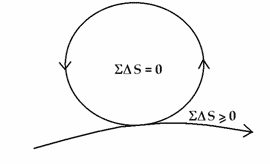
Figure 1. The quantum coherent organism and its circular thermodynamics
Part of the secret is that the life cycle contains an astronomical number of cycles of activities in quantum superposition; or, in thermodynamic terms, all coupled together in such a way that the energy yielding activities supply energy directly to the energy requiring activities (see Fig. 2). You can think of the cycles as biological rhythms and biochemical cycles, electromagnetic waves, local circuits of electrons and protons zapping around, down to vibrations of molecules and electrons.
To imagine what it’s really like, magnify each cycle in the diagram, and you get the same picture as the whole; and you can do this many times over until you come to the smallest cycle, representing say, an electronic vibration that has the period of femto-seconds (10-15s). This property of ‘self-similarity’ belongs to mathematical structures called fractals. Fractals fundamentally describe living processes, the most visible are fern leaves, branching patterns of trees and blood vessels, but later as you will see, also heartbeats (and in my book [1], space-time itself, though I won’t go into that here).
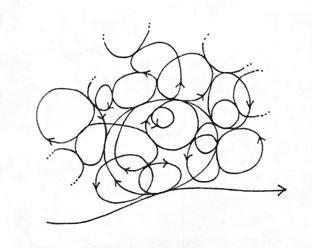
Figure 2. The quantum superposition of cycles of activities in the organism
As you can imagine, the more cycles there are, the more energy is stored, and for longer, because the more times the energy is used or recycled. This recycling and storage of coherent energy is against all previous thinking, even among those most enthusiastic about recycling of materials. Energy, they say, cannot be reused, because it flows in one direction only. But once you realise that coherent energy can be stored then the idea of re-use and recycling becomes obvious.
This circular thermodynamic model of the organism has important applications not only in holistic health, but also in ecology. It aptly describes an integrated, zero-emission, zero-waste farm that turns wastes and greenhouse gases into food and energy resources for mitigating climate change and solving the food and energy crisis [19-20] (Dream Farm 2, How to Beat Climate Change & Post Fossil Fuel Economy, SiS 29; Sustainable Systems as Organisms, ISIS scientific publication) as described in detail in this report [21] Food Futures Now: *Organic *Sustainable *Fossil Fuel Free (ISIS Publication) we launched in the UK parliament earlier this year. The many lifecycles in the integrated farm is effectively a sustainable ecosystem, each life cycle storing energy and material for the whole, in analogy to the activity cycles in the organism. It is the model of sustainable development we need to replace the mainstream model of unsustainable infinite growth that is now going bust in a big way.
The model of the quantum coherent organism depends on reciprocity and cooperation, rather than relentless Darwinian competition as in the mainstream model [22] (On the Nature of Sustainable Economic Systems, ISIS scientific publication) It will literally make love and end wars.
Hopefully, this is a new paradigm that will support a new world order that’s much closer to how nature is, that will enable us to live sustainably within her. Let me highlight some of the major implications of the quantum coherent organism.
Most spontaneous and free
The quantum coherent organism takes us well beyond the conventional view of organisms as machines (From Molecular Machines to Coherent Organism, ISIS scientific publication) [23]. It gives a whole new meaning to life, and the quality of life.
The organism, as you have seen is an incredible hive of activities from the very fast to the very slow, the local to global, all perfectly coupled together, so perfect that each activity appears to be operating as freely and spontaneously as the whole. To be quantum coherent is to be most spontaneous and free. Freedom is real, as I have argued in my paper, The Biology of Free Will [24] (ISIS scientific publication). The organism is radically uncontrollable in a mechanistic sense. If you try to do so, you compromise it, making it ill, and ultimately killing it. That’s why people would rather die than lose their freedom.
Mechanistic medicine fails for the same reason: it attempts to impose mechanistic control and prevents the restoration of quantum coherence that characterizes the healthy organism, resulting in terrible “side effects” including death.
The quantum wave function that describes the coherent organism is a superposition of all possibilities. It implies that the future is entirely open, and the potentials infinite. That’s just what a healthy person should feel like. It is not possible to predict the future from the outside, only from the point of view of the coherent organism within, which is why the coherent organism is radically uncontrollable.
A reformulation of quantum mechanics shows that an intention towards the future could determine the now. (This is not so strange when you think about it: of course, what I want to become will determine what I do now, but apparently, quantum theory is telling us that too.) Starting in the 1960s, Yakir Aharonov at Tel Aviv University in Israel and a number of colleagues and collaborators ask what would happen if, instead of just focussing on the initial state in conventional quantum mechanics, the quantum system is described both in terms of a pre-selected, prepared state and a final post-selected state. They showed that both the initial and final wave-functions will influence the outcome of measurements carried out in the now between the past and the future, and giving different answers
Remember? The quantum coherent organism is spontaneous and free; she lives in the ever-present overarching past and future, and by her very intentions, never ceases to create the now. The philosophical implications are profound and we can think about it for the rest of our life. But we must move on.
Vibrant sensitive intercommunicating whole, natural being and coherent society
To be quantum coherent is to have energy at will, to mobilize energy most rapidly and efficiently, and to be sensitive to extremely weak signals, whether electrical, mechanical, chemical, or as heat [1, 24]. Because of the large amounts of energy stored everywhere within the system, the organism does not have to be pulled and dragged into action. So what makes the coherent organism tick?
The new key to biological and social function is intercommunication, not command and control. Each is as much in control as it is sensitive and responsive. This describes a perfect democracy, a coherent society of distributed control in which the private and the public, the individual and the collective are not inevitably opposed as in the mechanistic Darwinian society we inhabit.
When intercommunication is perfect, it is nonlocal and instantaneous, transcending the usual separations of space and time. That accounts for the perfect coordination of functions in the healthy organism, which I shall say more about later. It also describes how ideas and feelings can spread like wild-fire in a society; and more esoterically, how something could be in multiple places at the same time and different entities far, far apart can exchange information instantaneously, all part of The Quantum Information Revolution [15] that I won’t have time to go into.
The unity of conscious experience
Quantum coherence is the prerequisite for conscious experience [26], as I have argued in detail in a paper published in 1997 (Quantum Coherence and Conscious Experience). It is why each and every one of us thinks of ourselves as “I” in the singular even though we are a multiplicity of organs, tissues and cells, not to mention the ten times as many bacteria as cells that live inside us and on our skin, most of them doing us good if we treat them well. When we say “I”, the little bacteria are saying “me too” in chorus.
I suggested that quantum coherence enables us to gate and bind our experiences in a series of non-local simultaneities that appear abruptly as large-scale phase-synchronised electrical activities observed in widely separate parts of the brain that has no obvious source in the brain itself, but are generated in the liquid crystalline matrix in which all cells, including neurons in the brain, are embedded. This has been corroborated since.
It is now estimated that between 40 to 65 percent of all activities in the brain is phase-synchronized at any one time [27], and these synchronized activities in different frequency bands – especially the gamma (35-50 Hz) -zHz)HH are indeed implicated in gating, segmenting and integrating sensory input, according to neurophysiologist Roy John
at New York University School of Medicine in the United States. Information in the brain is not encoded by the firing of dedicated neurons in particular brain regions that represents specific stimulus or features, but rather by distinctive temporal patterns of synchronized firing dispersed among many brain regions. Individual neurons can take part in numerous such temporal patterns. John proposes that intrinsic excitability cycles modulate the reactivity of cell ensembles at frequencies in the range of gamma oscillations (35-50 Hz), selecting particular subsets of neurons in the receiving system that can discharge synchronously with this distinctive temporal pattern. These external inputs are encoded as time series of synchronized firing in “parallel, multiplexed channels within each sensory pathway, offset by 25 ms (50Hz) and sampled every 80 ms.” Within each channel, the length of the representational time series appears to be 80-100 ms.
As I have emphasized, phase synchrony is just one kind of phase correlation, which happens to be the easiest to detect. Infinite possibilities exist for phase correlations, including anti-phase and harmonics, or indeed, complex fractal correlations as exhibited by the healthy heart rhythm (see later)
Appropriate effortless action
The Chinese Taoist text Wu wei, is usually understood as “no action”. I suggest that’s not the case; rather, it is the ideal of “no bother”, or effortless, coherent action, taken when the moment is ripe, when the entire universe is at one with you. You’ll have to be a real sage to achieve that.
Freedom, spontaneity, sensitivity, effortless action and effortless creation are all Taoist ideals cultivated in traditional Chinese art and poetry, in life itself. That is the way to a healthy life, without stress and strife. Again, we need to contemplate that for the rest of our life, but we shall move on.
Quantum coherent organism in a quantum universe
When I proposed quantum coherence for the organism in 1993, even my best friends would not accept it. But quantum coherence has become more fashionable since (see the Quantum World Coming series, Science in Society 22 [28]). Some people have even considered that the entire universe is quantum coherent [29] (Quantum Phases and Quantum Coherence, SiS 22), like a super-organism, I certainly think so [1, 30] (Life & the Universe After the Copenhagen Interpretation, SiS 34). What does that imply for human action and intention? They are not to be taken lightly, for the local can affect the global and vice versa. We are all, from the tiniest microbe to whales and the redwood tree, from elementary particles to galaxies, all entangled within nature, co-creating and willing it into existence from moment to moment.
* * *
In the second half of my talk, I would like to go into some specific examples of how quantum coherence translates into quantum medicine.
Medical physicists and mathematicians have been studying the heartbeat for the past 20 years because it looks so variable in healthy subjects. They talk about the “complexity of the heartbeat” and how best to wrest signs of dynamic order out of apparently random variability, which could tell doctors whether the person is healthy or not [31].
The most exciting discovery about the healthy heartbeat is indeed the rich mathematical structures underlying the variability that distinguishes it from arbitrary randomness; in much the way that music can be distinguished from noise. The healthy heart beats to the complex rhythm of quantum jazz.
The variability of the healthy heartbeat exhibits fractal self-similarity over a range of time scales, which is a sure sign of complex correlations. The self-similarity of the healthy heart rhythm can be demonstrated most clearly with a mathematical procedure called ‘wavelet transform’, which estimates the differing spectrum of frequencies contributing to the changing signal at different time scales (see Fig. 3).
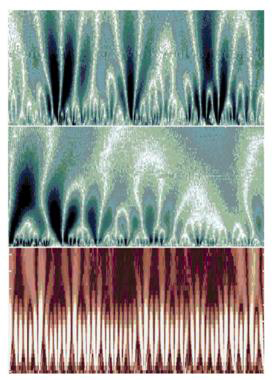
Figure 3. Wavelet analysis of heartbeat times series from a healthy subject (top and middle panel) and a patient with sleep apnea (bottom panel). See main text for details (modified from [32]).
The horizontal axis is time corresponding to about 1 700 heartbeats. The vertical axis is the scale of analysis increasing from 5 to about 300 s. The brighter colours indicate larger values of the wavelet amplitudes, corresponding to large heartbeat fluctuations. The white tracks represent the maximum wavelet transform lines, which exhibit a tree-like self-similar structure. So magnifying a portion of the upper panel corresponding to 200 beats on the horizontal axis and about 5 to 75 s on the vertical axis results in a structure (middle panel) resembling the whole. In contrast, the wavelet analysis of the times series from a patient with sleep apnea shows the loss of the self-similar structure.
There are many other ways to expose the dynamic order underlying the apparent irregularity of the healthy heartbeat. Most importantly, this dynamic structure is destroyed if the time series is shuffled, or randomised so that phase information is lost. Phase correlation is a signature of quantum coherence.
The significance of these findings is best described by one team of researchers [33]: the healthy heartbeat is “more like a symphony than a solo performance.”
The heart is obviously not a solo player in the quantum jazz of life. Instead, it is in symphony with all other players, intermeshing, synchronizing and syncopating with their varied rhythms, reflecting the correlations and couplings in a system that is quantum coherent in the ideal.
The coupling between heart and other rhythms is quite precise, extending to phase correlations among all the body rhythms, which is why shuffling the heartbeat time series results in the loss of the exquisite hidden dynamic order that includes precise phase correlations. An unhealthy heart, by contrast, is no longer intercommunicating, but falls back onto its own intrinsic rhythm, which is why it appears superficially more regular while the dynamic hidden order is destroyed.
The study of heart rate variability looks so promising that patents have been granted recently on mathematical procedures for “diagnosing heart disease, predicting sudden death, and analysing treatment response.”
Looking further ahead, this minimally invasive/intervention approach may be just the paradigm change we need in medicine to deliver health to the nation safely and effectively, based on an intellectually rigorous holistic perspective that’s nevertheless centred on the individual organism.
Researchers at HeartMath Institute in Boulder Creek California show how the heartbeat betrays all our feelings, good and bad; and feeling good may be the way to health and general well being by establishing large-scale synchrony between heart, respiratory rhythm and brainwaves [34] (Happiness Is A Heartbeat Away, SiS 35).
Of all the organs, the heart generates by far the most powerful and most extensive rhythmic electromagnetic field in the body. The electrical voltage generated, recorded as the Electrocardiogram (ECG), is about 60 times greater than the electrical activity produced by the brain, and it can permeate every cell in the body, via the liquid crystalline matrix. The magnetic component of the heart’s field is about 5 000 times stronger than the magnetic field produced by the brain, and can be measured several feet away from the body with the SQUID magnetometers. The electromagnetic waves generated by the heart are immediately registered in the brain waves.
Thus, information about a person’s emotional state is also communicated throughout the body and into the external environment via the heart’s electromagnetic field.
HeartMath researchers propose that the heart’s electromagnetic waves may interact with the fields of organs and other structures to create hologram-like interference patterns. that “in-form the activity of all bodily functions.”
And conversely, the heart is also informed by the activity of all bodily functions, which is reflected in its complex rhythm from moment to moment [31].
The new paradigm of life sciences is the physics of the organism as opposed to the physics of dead matter. And it has large implications for the continuing debate over the health hazards of weak electromagnetic fields (EMFs), currently focussed on the microwaves of mobile phone and wi-fi [35] (Drowning in a Sea of Microwaves, SiS 34). Cancer risks triple and quadruple near mobile phone transmitters [36] (Cancer Risks from Microwaves Confirmed, SiS 34), which are also among the main suspects in killing birds and bees [37, 38] (Mobile Phones & Vanishing Birds, Mobile Phones and Vanishing Bees, SiS 34).
The list of hazards associated with EMFs grows: brain damage in rats exposed for two hours, still detected after 50 days. DNA breaks and chromosomal abnormalities in cells, brain tumours in people, decrease in sperm counts and sperm quality in men, sterility in mice, and a host of microwave sicknesses in people living near mobile phone transmitters.
But the legal exposure limits are still set far too high; they assume our bodies are as insensitive as bags of inert salt solutions, so if the microwaves don’t burn you, then it is OK.
The biggest barrier to understanding the biological effects of weakEMFs is the same as that barring all forms of energy or quantum medicine from the mainstream: there is nothing in the conventional physics of dead matter that could make sense of them [39, 40] (Non-Thermal Electromagnetic Field Effects, Fields of Influence pt. 4 - The Excluded Biology, SiS 17).
Why are organisms so sensitive to weak electromagnetic fields? It is because they actually use electric currents and electromagnetic fields for intercommunication, and the liquid crystalline matrix is predisposed to facilitate that, as I shall show later.
Harold Saxon Burr in the 1930s [41] and Robert Becker in the 1960s to 1990s [42] had detected electric fields in developing embryos and adult organisms, and provided evidence that electric currents and fields are what the body uses for intercommunication, to heal itself, and in some cases, even regenerate lost parts.
Since the 1980s, electric currents flowing throughout the body, and even from single cells, can be detected with the highly sensitive SQUID (superconducting quantum interference device) magnetometer, which has been used to image the electrical activities of the brain since the 1990s [43]. But you can easily detect currents flowing through your arms and legs and especially emanating from the heart.
Solid-state physicist Herbert Frőhlich [44, 45] pointed out that the organism is densely packed with dielectric molecules (as in a solid-state device), which both react to and generate EMFs, and hence the laws of solid-state physics would apply to the organism as first approximation. He proposed that metabolic energy could ‘pump’ the living system into a state of “coherent excitations”, the way that pumping energy into a solid-state device could make its light-emitting atoms vibrate in concert to produce coherent light or laser. The term “coherent excitation” is wonderfully evocative. Frőhlich’s ideas apply even better to the liquid crystalline living matrix.
Unlike an ordinary laser that’s coherent in a single frequency of EMF, the living organism is potentially coherent over a multitude of frequencies spanning many orders of magnitude, 10 or more, so it might indeed be sensitive to EMFs over the entire range of frequencies from extremely low frequency radio waves to microwaves and beyond.
There is now evidence that molecules do intercommunicate by singing the same notes to one another (and flashing the same signal) [46] (The Real Bioinformatics Revolution, SiS 33). Conventional wisdom has it that molecules in solution ‘bump’ into each other by chance, and if they fit together like lock and key, they can latch on and do whatever is necessary. But the cell is extremely crowded in a liquid crystalline state, where practically nothing is free to diffuse, not even the water. So how can molecules find one another in the first instance? It is like trying to find a friend in a very large and crowded ballroom in the dark. By intercommunicating or resonating at particular frequencies of electromagnetic waves, molecules can now hear and see one another, as well as become ineluctably attracted to one another. And that can happen only in a coherent, noiseless system. In a coherent, noiseless system, ultraweak signals can have extraordinarily large biological effects.
The usual denial that very weak EMFs can have biological effects is that the energies in these fields are “below the thermal threshold” of the random molecular motion characteristic of dead matter (equilibrium thermodynamics), which will certainly swamp out the weak signals.
But coherently vibrating molecules in the physics of life, far from swamping out the weak signals, will sum up their response to the weak signal, and hence result in a substantial effect.
To use another analogy, the organism is like an exquisitely tuned receiver (and emitter) of EMFs over the widest possible range of frequencies. That’s why the quantum jazz of the organism is so fantastic; its antennae are tuned to signals from many frequencies, from the earth, the sun the moon, perhaps even from distant stars and galaxies, and will respond to them with new music. But quantum jazz could also be sabotaged by malignant interference.
The liquid crystalline matrix is not only sensitive to EMFs, but also to subtle changes in pressure, temperature and pH, which it converts to electrical signals. It is predisposed for the instantaneous, noiseless intercommunication that enables the organism to function as a perfectly coordinated whole.
I became interested in the acupuncture meridians of traditional Chinese medicine because they are clearly involved in intercommunication throughout the body, but all attempts to pin them down to anatomical structures have failed so far. My suspicion turned to the connective tissues and collagen.
The most abundant protein in the body is collagen, which form fibres and other aligned structures in the connective tissues. We had started to study the self-assembly of collagen and its structure in various connective tissues, and discovered how water associated with collagen is intrinsic to its liquid crystallinity [6].
In a paper published in 1998, David Knight and I proposed that the water channels aligned in and around collagen fibres might be the basis of the acupuncture meridian system of traditional Chinese medicine [47] (Liquid Crystalline Meridians, ISIS scientific publication).It was already known that collagen conducts 100 times as much along the length of its fibre than perpendicular to it, very likely due to the water molecules aligned along the groves and surfaces of the collagen molecules that form the fibre, and various other composite structures, and hence it was reasonable to assume that meridians would follow the length of the fibres in some way. By contrast, acupuncture points typically have low electrical resistances compared with the surrounding skin, and may therefore correspond to singularities or gaps between collagen fibres, or, where collagen fibres are oriented at right angles to the dermal layer.
Positive electricity zaps through water chains
It has been suspected for some time that the water molecules aligned by proteins and membranes may provide a special intercommunication channel, in the form of jump conduction of protons (positive electricity), which is much faster than nerve conduction, and faster than conduction of electricity through wires. And this has been confirmed since [48] (Positive Electricity Zaps Through Water Chains, SiS 28) (see Fig. 4). Proton jump conduction is very fast because the proton doesn’t actually travel from one end to the other but depends on a chain of hydrogen-bonded water molecules to relay the charge, so as a proton sticks on at one end, another pops off at the other. These chains of hydrogen bonded water molecules have been found in channels formed by proton pumps that go across the cell membrane, and act like ‘proton wires’.
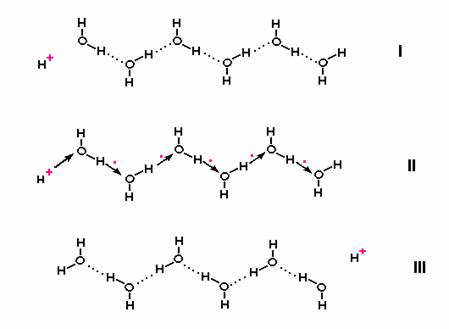
Figure 4. Jump conduction of proton along a chain of hydrogen-bonded water molecules. Note that it can go in either direction.
There are other observations consistent with our hypothesis, which I have summarised in a paper presented at a conference on acupuncture in 2005 [49] (Acupuncture, Coherent Energy and Liquid Crystalline Meridians), but even more stunning research results have appeared since, especially on water.
Water is the most abundant substance on earth, and life, as we know it, is impossible without water.[50] (Two-States Water Explains All? SiS 32). Its properties are very strange and completely out of line with those of compounds of its neighbours in the Periodic Table.
The ability of water molecules to form hydrogen bonds with one another is responsible for the strangeness of water and its ability to support life. Water forms dynamic structures both in bulk water and in confined spaces.
First sighting of structured water in confined spaces
“Structured water” is serious science. Generations of big instruments have been deployed to detect it: ultra-fast electron crystallography is among the latest, after more than a decade of neutron scattering, X-ray diffraction, nuclear magnetic resonance, etc., not to mention the considerable number-crunching to extract information out of the data, and hours upon hours of computer simulations that go into modelling it.
But no one has actually seen structured water itself, until it was caught on camera; not an ordinary camera, admittedly [51] (First Sighting of Structured Water, SiS 28). Researchers at Drexel University, Philadelphia and University of Illinois in the USA, and the Tokyo Institute of Technology in Japan, produced stunning images on high-resolution transmission electron microscopy (TEM) of carbon nanotubes of different sizes with water trapped inside them [52].
The researchers discovered that in large diameter carbon nanotubes (10 to 200 nm), water behaves conventionally, much as they would in an ordinary capillary tube. The water inside the hollow tube shows up in low contrast, and at the boundary between liquid and gas phases, a typical meniscus (concave surface) is observed.
In small diameter nanotubes (2 to 5 nm), however, liquid water shows up in high contrast, giving a bright beady appearance (Fig. 4), quite unlike the water trapped in the bigger nanotubes. There is no meniscus separating the liquid from the gas phase. In fact, the water molecules appear not to interact with the wall of the nanotube, but concentrate on interacting with one another, leaving a gap between the liquid water and the wall. They look like multiple strands of pearls twisted together
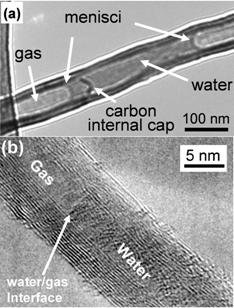
Figure 4. High resolution TEM of big nanotube (a) and small nanotube (b) with water trapped inside (Courtesy of Dr. Ye, H.)
This raises a host of interesting questions, including what kind of proton-conduction properties such water cylinders inside narrow nanotubes would have, as they are like a superconducting cable of many proton-wires twisted up together.
Do such potentially super-conducting proton cables exist in living organisms?
Collagen aligns water into superconducting cables?
Gary Fullerton, Ivan Cameron and colleagues at Texas University San Antonio in the United States identified phase-transition like behaviour in the water associated with the collagen of bovine tendon on solid-state nuclear magnetic resonance (nmr) as the tendon is dried. On the basis of the data, they proposed a model suggesting that the collagen water is structured in regular chains along the collagen fibrils, fitting into the grooves of the triple helix [53, 54] (Collagen Water Structure Revealed, SiS 32) (see Fig. 5).
The collagen water chains are reminiscent of those seen in carbon nanotubes <5nm diameter (see above), and I would not be surprised if some regularly structured proton cables, organized by, or between collagen fibres, which are abundant in connective tissues, were actual acupuncture meridians.
The cell imaging community has been excited by a recent discovery: second harmonic generation by collagen fibres [55]. Fire infrared laser photons at collagen and you get back frequency doubled uv light that sums the energy of two infrared photons together. This kind of non-linear optical response was previously only found in rock crystals like quartz. No one in the cell biology community using the technique has commented on the significance of the observation, i.e., the collagen is liquid crystalline, and water is integral to this liquid crystalline structure [6] making it behave like a quartz crystal.
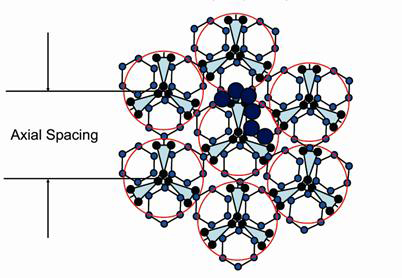
Figure 5. Cross section of a collagen fibril containing 7 triple helices (individual collagen molecules(, each of which has 3 x 6 = 18 water chains covering it completely.
Acupuncture points connect with the brain
Soon after our paper on liquid crystalline meridians was published, there appeared a report from Cho Zang-Hee and his research team [56]. Cho, a medical physicist at the University of Washington, Seattle in the United States, pioneered the proton emission tomography (PET) scanner. He injured his back while on holiday in Korea, and found almost instant relief with acupuncture treatment. With his curiosity thus aroused, he began experimenting with functional magnetic resonance imaging (fMRI) on volunteer medical students to see if he could detect changes in their brain when acupuncture treatment was given to them.
He flashed a light in front of their eyes and, as expected, the visual cortex of the brain lit up on the fMRI. Then Cho had an acupuncturist stick a needle into one of the acupuncture points at the side of the little toe, which is traditionally used to treat disorders of the eye. In one person after another, the visual cortex lit up, just as if they had been stimulated with a flash of light in their eyes.
Cho had set a new trend in acupuncture investigations. Many fMRI and PET scan studies were to follow, which demonstrated that acupuncture treatments could indeed stimulate or inhibit specific parts of the brain, though the story is more complicated, as there are different schools of acupuncture [49].
Moxibustion lights up meridians
Another development comes from the laboratory of Fritz Popp. Fritz and his colleagues at the International Biosphysics Institute in Neuss, Germany used a standard method of infrared thermography - which images the heat from the human body, and is sensitive to infrared radiation between 3.4 to 5 mm wavelength – to see what happens when a moxibustion stick was burnt near an acupuncture point. To their amazement and delight, they saw light channels appearing after a few minutes, tracing out the major acupuncture meridians [57]. When the moxibustion stick was removed, the lit-up meridians also disappeared within half a second.
Would an excited and conducting proton cable give off infrared light? Water has several strong absorption peaks within the infrared range, and it would not be surprising if excited conducting water would also emit within this range. The rate at which it disappeared is suggestive of the speed with which a proton current can cease to flow.
Liquid crystalline water at the interface
The importance of water in the cell has been argued most cogently by Gilbert Ling over a period of more than 40 years, with very few people who were really equipped to understand him; as it required skills that cut across the disciplines of physics, chemistry and biology [58, 59] (Strong Medicine for Cell Biology, SiS 24).. Ling had proposed long ago that water in the cell is completely aligned in multiple layers on the hydrophilic surfaces of membranes and proteins through dipole interactions. And that could explain many puzzling properties of the cell, such as how it naturally excludes sodium in favour of potassium, without having to invoke sodium/potassium pumps that require a great deal of ATP, and energy to make the ATP. Furthermore this ‘interfacial’ water aligned on the hydrophilic surfaces has very different properties compared with bulk water, for example, it is much more ordered like ice, but unlike ice, it will never freeze.
A most pleasing and convincing demonstration that cell water really makes a difference to the cell comes from another scientist who was inspired by Gilbert Ling’s work. Ludwig Edelmann at Saarlandes University in Germany showed that when great care is taken over fixation procedures that do not strip the cell water from the proteins, a very different and much more aesthetically appealing picture of the cell is obtained [60]. It is so beautiful it took my breath away when he first showed it to me [61], as it looks much more like the dynamic liquid crystalline cell I have in mind (see Fig. 6).
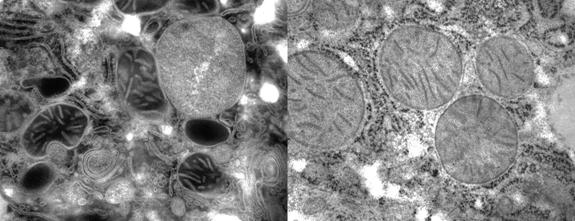
Figure 6. Two faces of the cell: alive and fully hydrated (left), fixed and dehydrated (right) (courtesy of Edelman G.)
Gerald Pollack’s research team at the University of Washington, Seattle, in the United States, also inspired by Ling, offered an uncanny, apparent confirmation of Ling’s hypothesis [62, 63]. Using small micron-sized spheres (microspheres) as solutes that can be seen under the microscope, they found that water forms a massive exclusion zone (EZ) extending up to hundreds of micrometres away from the surfaces of hydrophilic gels (see Fig. 7).
The EZ is typically millions of water molecules deep. Pollack and his colleagues have ruled out all sources of artefacts that they and others could think of, and recently confirmed and extended their spectacular findings [64, 65] (Liquid Crystalline Water at the Interface, SiS 38).
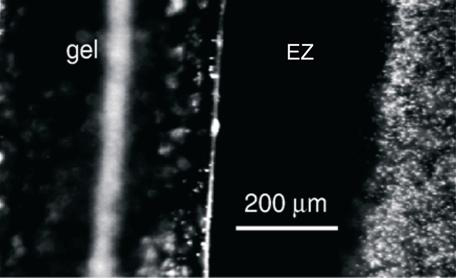
Figure 7. Clear exclusion zone free of microspheres next to the gel surface
They found that a wide range of hydrophilic gels gave EZ water: polyvinyl alcohol, polyacrylamide, polyacrylc acid, Nafion (used as a proton exchange membrane in fuel cells), and biological tissues such as a bundle of rabbit muscle or collagen. In fact, a single layer of hydrophilic charged groups coated on any surface is sufficient to give an EZ. The requirement is to have chemical groups that can form hydrogen bonds with a first layer of water molecules, and the other layers then stack up on top. Similarly, solutes need not be microspheres, they could be red blood cells, bacteria, colloidal gold, and even molecules such as serum albumin labelled with a fluorescent dye, and a fluorescent dye molecule as small as 200-300 daltons. All are excluded from EZ water.
Most interestingly, EZ water was also found at the air-water interface. The EZ layer, thick enough to be seen easily with the naked eye, was sufficiently stiff to be lifted up with a glass rod without breaking.
As EZ water can be produced in bulk, it is easy to demonstrate other altered properties. NMR measurements confirm that the layer is associated with decreased mobility (increased order) relative to the bulk water, while infrared imaging showed it emitted much less than bulk water, again indicative of increased order. In fact, it is liquid crystalline water
There was already a hint that the EZ has unusual electrical potential when pH sensitive dyes were used as solutes to see if they too, were excluded from the EZ. Indeed, they were, but they also showed up a zone of unusually low pH (red band) right above the clear EZ (see Fig. 4). A low pH means high concentration of protons (H+) immediately next to the EZ, and decreasing away from it. An excess of protons suggests that charge separation has taken place in the water molecules as follows:
So where did the negatively charged OH- ions go? A measurement of electrical potential shows that away from the EZ, the bulk solution had the same electrical potential everywhere, however, as soon as the measuring electrode enters the EZ, the electrical potential dropped sharply to –120mV or more, depending on the gel involved, remaining at that level well into the gel itself.
This macroscopic separation of charges is stable, as is the EZ itself. It is in fact a water battery. A battery, like any other, could be used to power light bulbs or your labtop, and could be the most exciting application of liquid crystalline water. But what charges up the water battery? It takes energy to separate the charges, so where does the energy come from? That too was a surprise.
It turns out that water is sensitive to light. The EZ thickens on being exposed to light, which means that light enhances the formation of liquid crystalline water. The entire spectrum of sunlight is effective, but the peaks are in the visible blue and especially the invisible near-infrared (3 000 nm) regions. A mere 5 minute exposure to the infrared light will cause the EZ to thicken several-fold. And if you connect up the EZ and the bulk water above to an external circuit, there is a measurable current, which lasts for a considerable time after the infrared light is turned off.
Green plants and especially blue-green bacteria have been splitting water for billions of years, in order to obtain energy from the sun; and in the process fixing carbon dioxide to make carbohydrates and other macromolecules to feed practically the entire biosphere. The separation of charges in the formation of liquid crystalline water is essentially the same process. (So there may be a real sense in which sunbathing can energize the body!)
Pollack asks tantalisingly: Can water replace oil? The applications of liquid crystalline water are wide-open. His lab is already working on a water-purification device based on separating liquid crystalline water of the EZ from the bulk water. (Liquid crystalline water is reputed to have health-promoting properties, though that is still unconfirmed.) Another application is anti-fouling agent: a coating that essentially prevents any impurities in water from sticking.
I’ve sketched the barest outlines of the exciting quantum revolution that has been happening over the past decades, and I am sure this conference will move it on much further. I thank all my colleagues at ISIS for their input and support of this work over the years, especially my husband Peter Saunders and cofounder of ISIS, and thank you for you attention.
Article first published 01/10/08
Comments are now closed for this article